Topping East - Ryoichi Seimiya

SPECIAL
INTERVIEW

Sumida and Me
Topping East - Ryoichi Seimiya

Topping Yeast

Ryoichi Kiyomiya​

Q 1. (Sumidade) What kind of work and activities do you do?
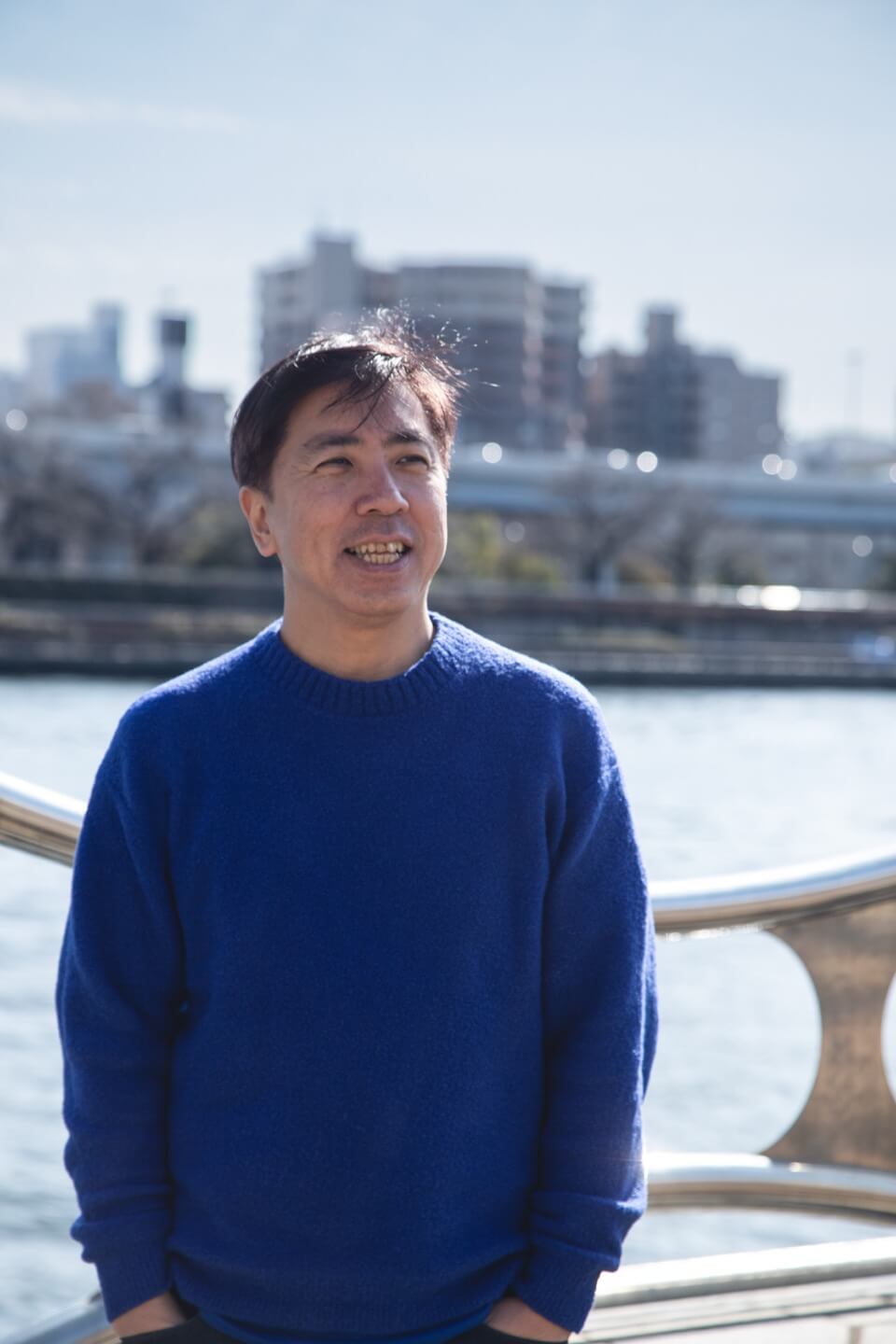
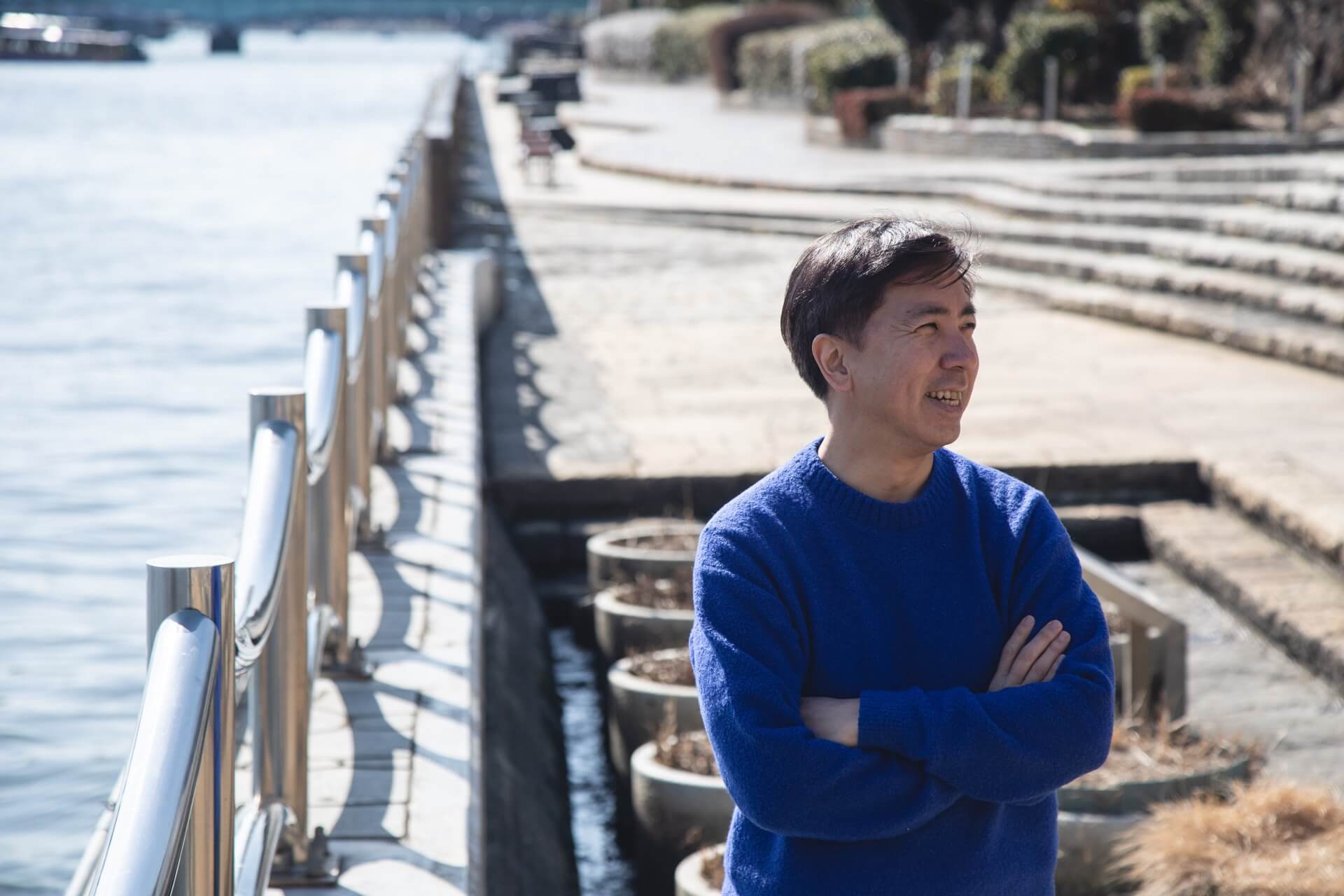
For me, "Sumida" is less about Sumida Ward itself and more about the Sumida River behind it. I've been involved in community activities, mainly using music and art, around this river for about 13 years, starting in 2010.
Q 2. Why and what circumstances do you work and engage in activities at Mida?
I was born in Minami-Senju, upstream from here, which is my father's family home, but my mother's family home is in Katsushika-Tateishi, a little further across the river and across the Arakawa River. After that, I lived in Hanakawado, which is visible from here, and now I live in Ryogoku, which is on the other side of the river. I've been going back and forth along the Sumida River for a long time, and I started these activities because I wanted to make the place where I live more interesting.
Q2
Q. Please tell us about the charms of Sumida (people, things, places, etc.)!
There are two things, and one is history.
The Great Kanto Earthquake caused significant damage to the Sumida River basin. This year marks exactly 100 years since then, and in order to control the flooding of the Sumida River, the incredibly wide Arakawa River was dug by hand as a diversion channel. From then on, flooding caused by the river decreased, but this area was apparently polluted by wastewater from the many factories that were there, around the time of the Olympics in the 1960s.
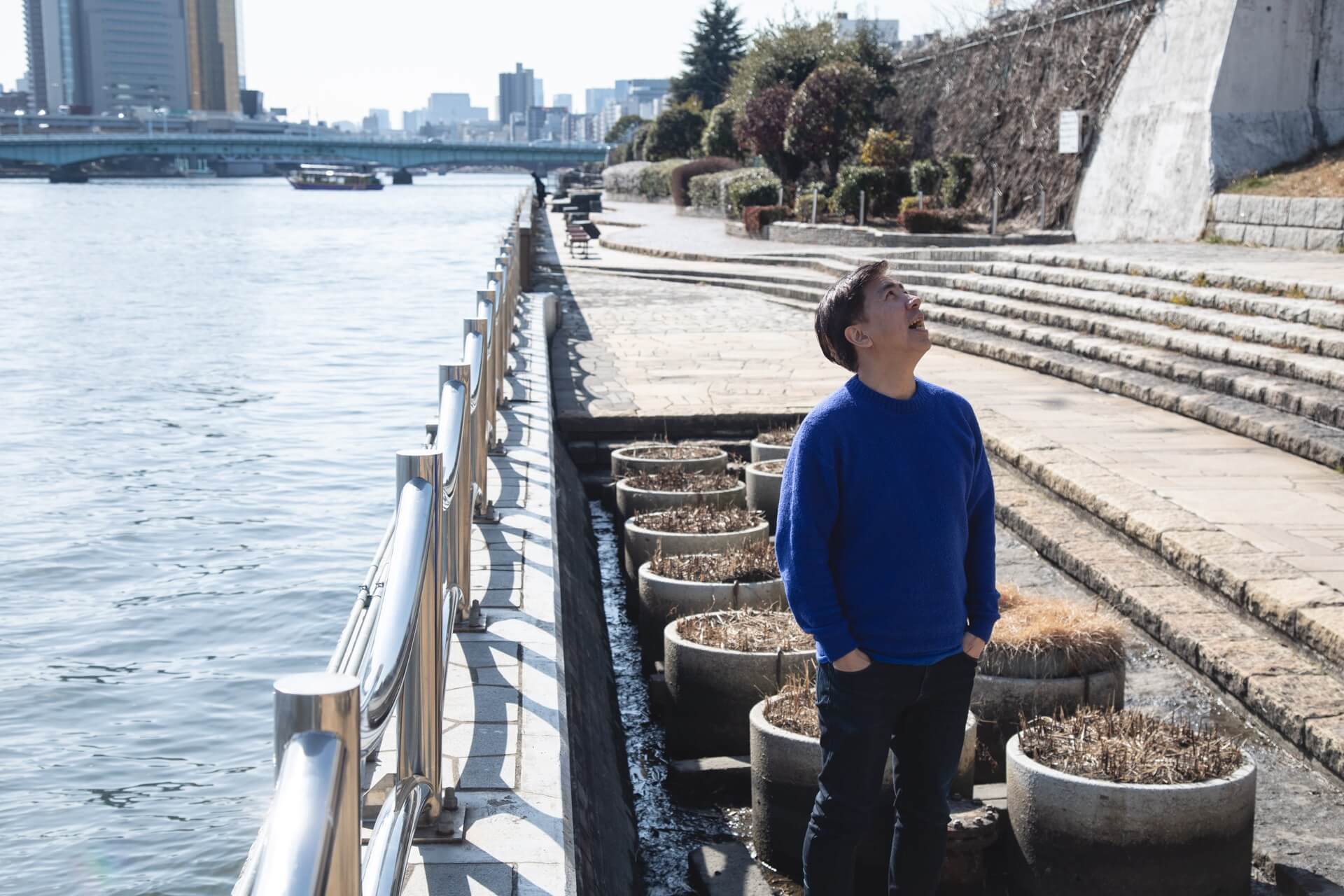
Since then, efforts have been made to clean up the river, and even now, sightseeing boats pass through it, and it has gradually become a place of relaxation. The fact that it has taken about 100 years to become a place of relaxation shows the accumulation of effort. In this place that has been maintained by the hands of many people, we are thinking about what we should do next and what we can do to make it more lively, and we are trying out various ideas.

Another one is circulation.
Where do you think the water in this river comes from?
If you trace its course, the Arakawa River flows all the way up here, originally from Mount Kobushigatake in Okuchichibu, but that's only one-third of the river, and the other two-thirds is sewage. Sewage is the last thing people produce when they're active, isn't it? Garbage is the same. Sumida Ward has a large waste treatment plant and leather tanning facilities. It's an area that deals with things that are the final destination of human life. When you start something new, the question is, what do you do with the water and garbage that are produced as a result of that activity? This area is responsible for taking care of that. I think there's something incredibly appealing about that, and I think it's important that they continue to take care of that. I find the accumulation of history and the fact that this region is the last line of defense in the cycle of life to be fascinating.
Q3
Q 4. Sumi, what kind of town do you think it will become in five years?
There's something we're currently preparing at Topping East, and while it's not something I've been able to put into words yet, I want to create an environment where more and more people who have things they want to do can do them in public spaces like terraces and parks—places that everyone can use.
I want to create a new, unprecedented alliance team in the Sumida River basin, working with the government, universities, and companies, so that young people, especially university students and even elementary school students, can use public spaces as a place to pursue their ideas. I want to make this a reality within the next five years.
PROFILE

Ryoichi Kiyomiya

Born in East Tokyo in 1974.
He presides over the "BOYCOTT RHYTHM MACHINE VERSUS" project, an improvisational battle between musicians, and since the production of a documentary film in 2006, he has held performances at the National Museum of Nature and Science, Korakuen Hall, and the Steinway Piano Factory in New York. He is continuing this project, which aims to challenge Japanese musicians on the international stage, with the goal of conquering all five continents as his life's work.
After joining Ryuichi Sakamoto's label commmons, he established the music production company Vinyl Soyuz LLC in 2014, and has produced numerous performances in special venues and public spaces.
At the same time, they established the NPO Topping East and developed art programs rooted in their local area, East Tokyo. In 2021, they held Tokyo Tokyo FESTIVAL Special 13 "Sumida River Raging Waves," in 2022 "Sumida River Journey," and in 2023 "Sumida River Memorial Service."